

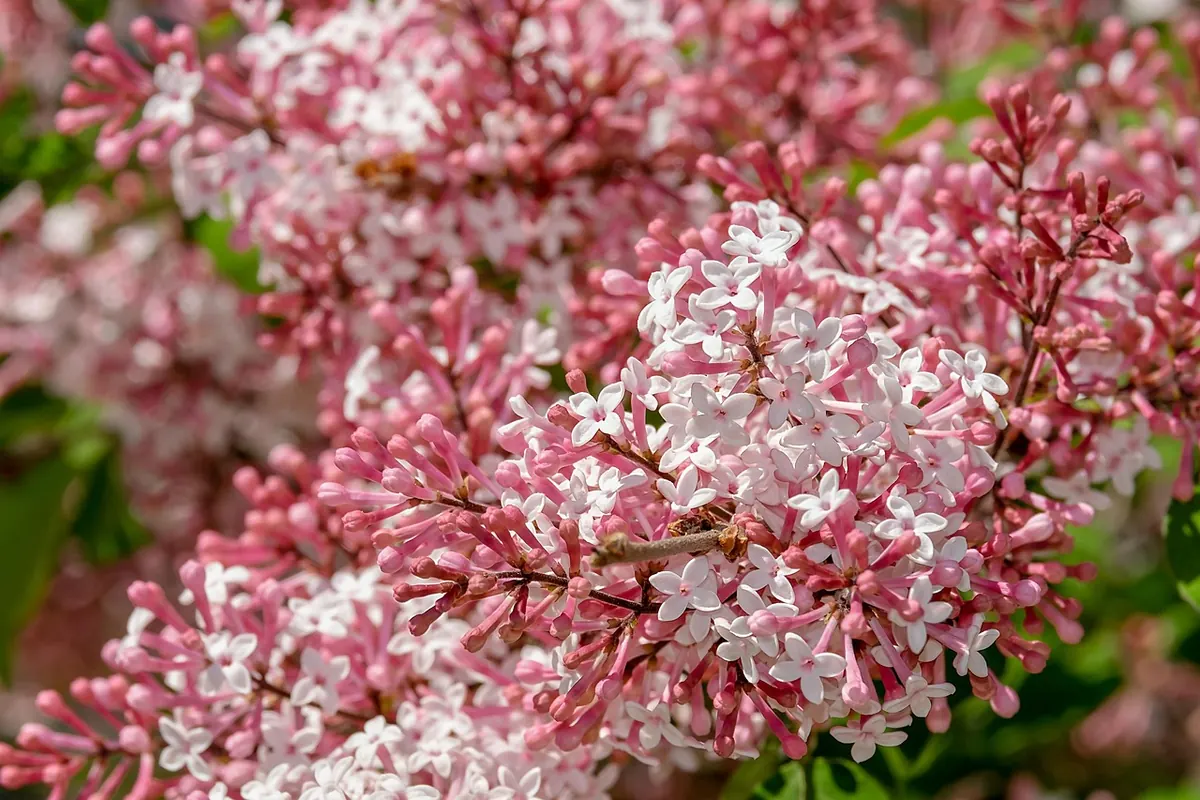
If you have ever walked past a lilac in full flower in late May, you will know why it is worth the effort. That effort is mostly about space. A lilac in a pot has nowhere to run, so everything it needs has to come from you: the right compost, the right amount of water, and a little attention at the right moments. Get those right and a lilac will settle into a balcony or sunny patio for years. Get them wrong and you get a leafy shrub that never flowers, or worse, a plant that quietly dies over a wet winter. Here is how to keep it happy across a British year.
Pick a lilac that suits a pot
Common lilac, Syringa vulgaris, is a big shrub. In open ground it will happily reach three or four metres, and its roots resent being fenced in. In a container it tends to sulk, flower sparsely and run out of room within a couple of seasons.
Choose a dwarf instead. Syringa meyeri 'Palibin' stays compact and flowers young. Syringa pubescens subsp. microphylla 'Superba' has a neat habit and that unmistakable scent. 'Miss Kim' is another good container candidate. All three sit comfortably around 1.2 to 1.5 metres in a pot.
Buy a containerised or grafted plant rather than a bargain bare-root, as grafted lilacs flower far sooner. One plant per pot. Two crowded together will compete for water and nutrients, and neither will thank you.
Compost and the right pot
Loam-based John Innes No. 3 is the best starting point. It holds water and nutrients far better than multipurpose compost, which is exactly what a thirsty lilac in a pot needs. Mix in roughly a quarter by volume of horticultural grit or perlite so water drains freely.
Lilacs prefer neutral to slightly alkaline soil, so avoid ericaceous compost. If you are using a peat-free multipurpose mix, add grit and a small handful of garden lime.
On pot size, go larger than you think. A diameter and depth of 40 to 45cm is a sensible minimum for a dwarf variety. Terracotta or a heavy glazed pot is worth the money on a windy balcony, because it will not topple. Whatever you choose, make sure it has proper drainage holes.
Watering: thorough, not constant
Lilacs are drought-tolerant once established in the ground. In a pot, that tolerance disappears. Water when the top two or three centimetres of compost feel dry, which in July may mean once a day, or twice on a baking day. Soak until water runs out of the bottom of the pot, then stop.
Never leave the pot sitting in a saucer of water. Cold, sodden compost is the single most common reason container lilacs fail over winter.
A two-centimetre mulch of gravel or bark over the compost surface slows evaporation and keeps weeds down. In winter, cut back on watering but do not stop altogether. On mild, dry days, a little water helps a plant that cannot draw moisture from frozen compost.
Feeding through the season
Start feeding in March, as growth begins. A balanced general-purpose feed every fortnight is plenty. Once flower buds appear, switch to a high-potash tomato feed to encourage good bloom and colour, and continue until the flowers fade.
Stop feeding by late July. Late nitrogen pushes out soft growth that will not harden before the frosts. It also costs you flowers the following year.
Each spring, scrape off the top few centimetres of old compost and replace it with fresh John Innes No. 3. That top dressing does more good than any amount of extra liquid feed.
A month-by-month year
- January and February: the plant is dormant. Check the pot is not cracking, clear any blocked drainage holes, and firm the plant back in if frost has lifted the rootball. Brush heavy snow off the branches rather than letting it weigh them down.
- March: growth begins. Repot if the roots are circling the inside of the pot, top dress, mulch and start feeding. Move the pot to its sunniest, most sheltered spot if it has spent winter elsewhere.
- April: buds swell and watering becomes a regular job. Watch for aphids on new shoots and for brown, water-soaked patches on leaves, which suggest bacterial blight. Remove affected leaves and improve airflow.
- May and June: flowering. Keep the compost consistently moist, deadhead spent trusses, and prune immediately after flowering. Cut the faded flower head back to a strong pair of shoots. Lilacs flower on older wood, so pruning later in the year means cutting away next spring's blooms.
- July and August: feed tails off and stops by the end of July. Remove any suckers sprouting from below the graft, or they will take over the plant. Keep watering, especially in dry spells.
- September and October: leaves turn and fall. Clear them from the compost surface rather than leaving them to harbour disease. Watering reduces but the compost should never dry out completely.
- November and December: winter protection goes on (see below). Check any ties are not cutting into stems, and make sure the pot is not sitting in standing water.
Winter protection that actually works
Soil in a pot gets colder than soil in the ground, and the roots of even a fully hardy lilac can be damaged when the compost freezes solid. The fix is straightforward. Raise the pot onto feet or bricks so water drains away and cold does not travel up from the paving. Move it against a sheltered wall, ideally out of the prevailing wind.
Wrap the outside of the pot with bubble wrap or hessian, but leave the top of the compost and the plant itself uncovered. Wrapping the crown traps damp around the buds and does more harm than good. If you have an unheated greenhouse or a cold frame, that is ideal. Otherwise, water sparingly during mild spells and let the plant rest.
The three things that matter most
Sun, drainage and timing. Give a lilac six hours of direct light if you can, keep the roots out of standing water all year, and prune only in the weeks straight after flowering. Do those three things and a dwarf lilac in a pot will reward you with scent drifting across the balcony every May for a decade or more. Everything else in this guide is fine-tuning.
Photo: Couleur / Pixabay